- A Self-Taught Dyer Who Revived Kyoto Indigo
Indigo dyer Riku Matsuzaki has a studio in Kyoto's Oharano area. He dyes with only sukumo—composted tade-ai indigo—and lye made from wood ash, creating entirely natural indigo without synthetic dyes. His work has a vivid blue cast and a deep indigo color that immediately catches the eye. These shades reflect his love of indigo and his sustained pursuit of the craft. Fascinated by indigo dyeing, Matsuzaki devoted particular attention to preparing the dye vat. Through self-directed study, he ultimately succeeded in cultivating Kyoto indigo, whose production in the Rakugai area—the outskirts of central Kyoto—had died out during the Taisho era. He uses the indigo he grows in his own work and in this dyeing experience.


Japanese Indigo Dyeing
Find the Beauty of True Blue through Homegrown Japan Blue
Nishiyama, Kyoto



In this experience, you will learn from a craftsperson devoted to indigo about the dye's history of more than 6,500 years and the differences between natural indigo and chemical dyes.
You will also hear directly from him about the role of indigo dyeing and the benefits of wearing indigo-dyed fabric, which has strong antibacterial properties.
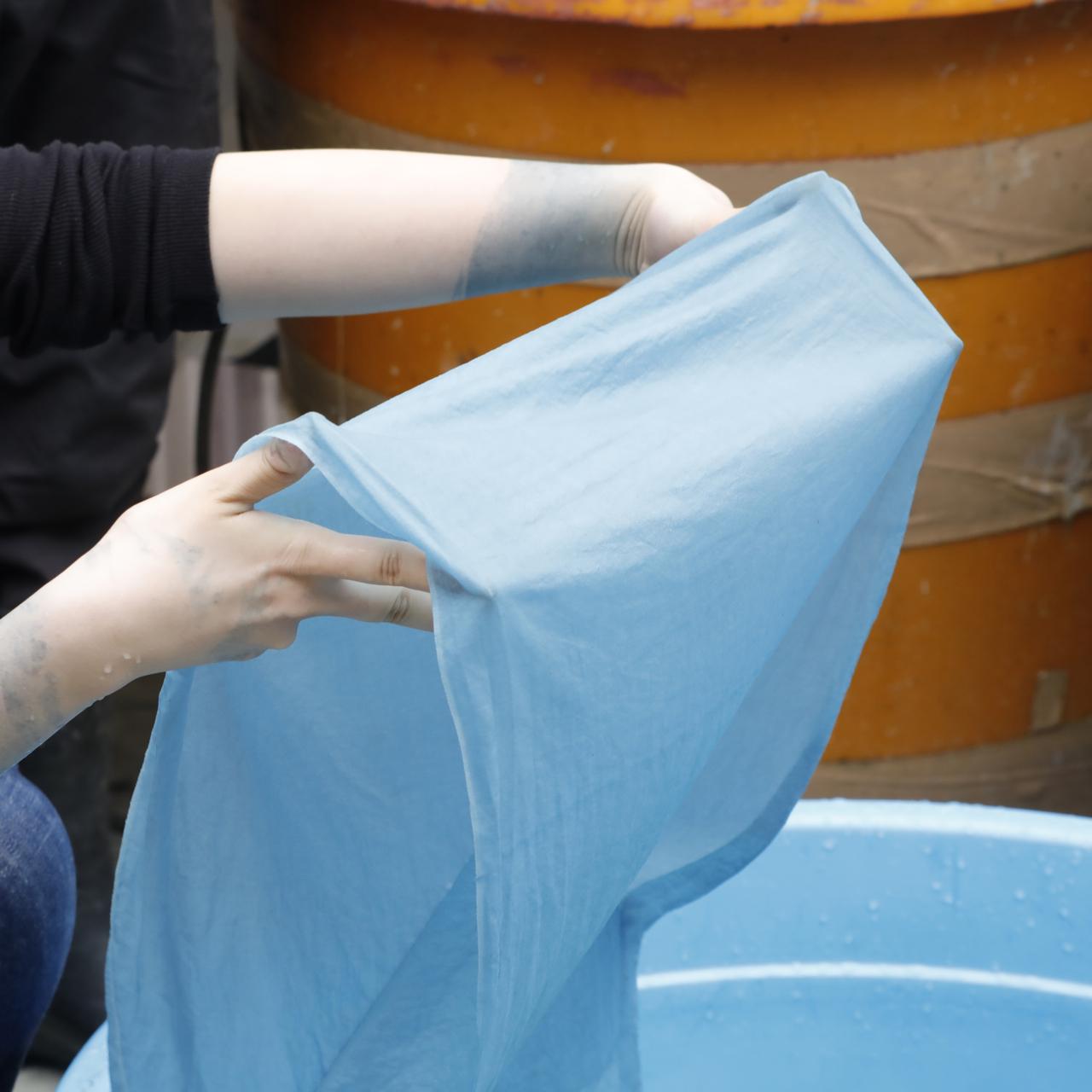


- A Deep Pursuit of Indigo Dyeing
The process of preparing an indigo dye vat is called ai-date. Many methods have emerged over the long history of indigo dyeing. Matsuzaki traced that history, tested techniques from different periods, and continued his research until he achieved results that satisfied him. He ultimately developed a method using only sukumo indigo—composted tade-ai—and lye made from wood ash.

- He says
“Japan has an extraordinary variety of colors, each with its own meanings and names. In Kyoto, one of the roots of Japanese indigo dyeing, you can learn about the meaning and essence of color through Kyo-aizome and experience the dyeing process for yourself. You can also develop your own color to create a unique work of art.”


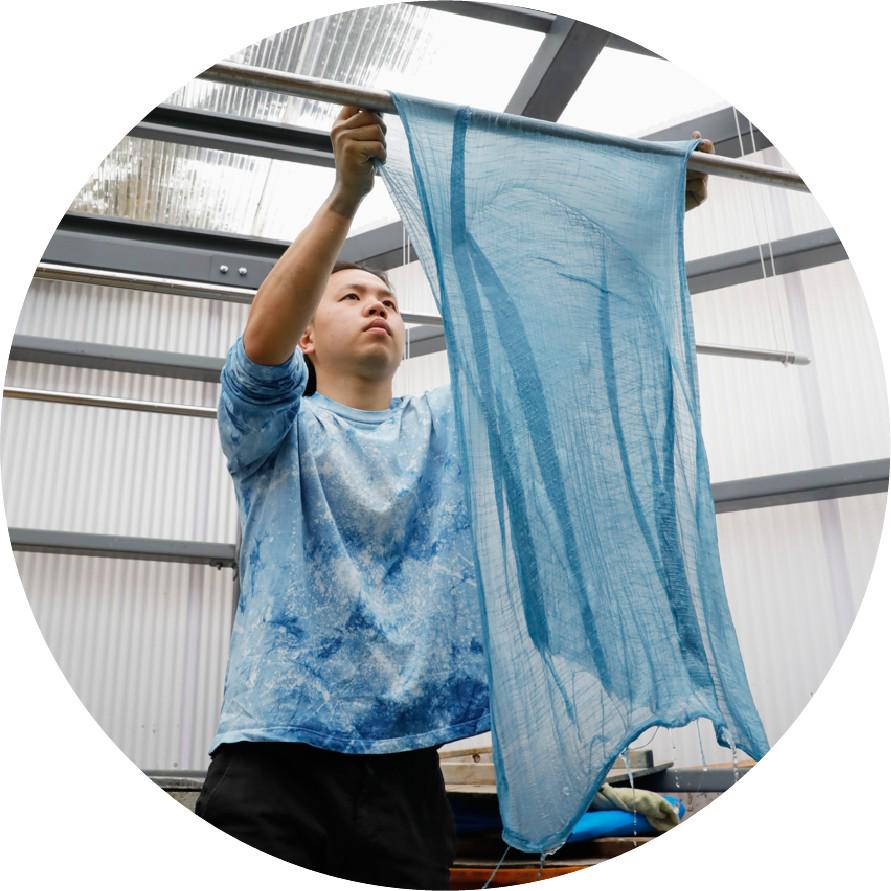
- Indigo Dyer
- Riku Matsuzaki
- The roots of Japanese indigo lie in Kyoto. Returning to the fundamentals of fermentation, he uses water, wood ash, and homegrown indigo to produce genuine indigo dye that does not bleed. At his studio, he has revived the lost “Kyoto Indigo” of the Taisho era and incorporates the colors of natural plants that have supported human life into both art and everyday objects.
Access
6 mins. train and 15 mins. taxi from Kyoto Station
Experiences
- Reserve
Natural Kyoto Indigo Dyeing Experience
30,500 JPY / personVisit an indigo studio in Kyoto’s Nishiyama area where artisan Riku Matsuzaki has revived a locally grown Kyoto indigo tradition. His dye vat uses sukumo—composted indigo leaves—and lye made from wood ash, without synthetic dyes. Learn how this fermentation-based process differs from chemical dyeing and how it produces a colorfast, non-bleeding finish.
Choose a cotton, silk, bamboo-fibre, or cashmere stole and build your preferred depth of blue through repeated dipping, oxidation, and rinsing under the artisan’s guidance. The base experience price is separate from the material fee, which varies by textile. Take the finished stole home after the approximately three-hour experience.
